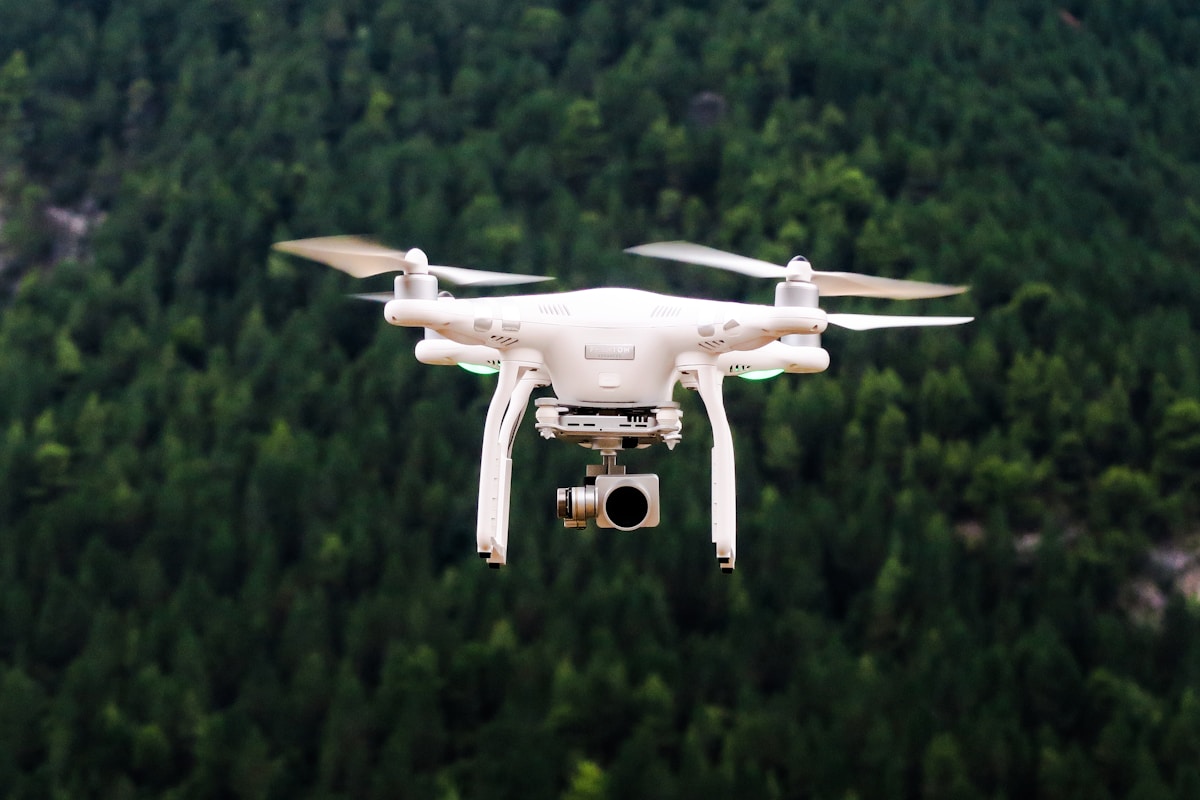
Bengaluru-based defence-tech startup Paar Autonomy has raised a $1 million seed round led by AdvantEdge Founders, according to Inc42's funding tracker for the week of 19–23 October 2026. The deal adds another defence bet to the startup funding in India pipeline this week, where deep-tech cheques remained small but steady.
Founded in 2024 by Vignesh Jayaraman, Paar Autonomy builds perception hardware and agentic artificial intelligence for unmanned vehicles — aerial, ground and sea — used in defence, policing and industrial inspection. Its core product is multi-sensor, gyro-stabilised gimbal cameras that give drones and rovers what the company describes as super-human sight, coupled with proprietary AI models that let machines interpret complex environments, coordinate with human operators and collaborate in real time.
What Paar Autonomy builds
The startup's first focus is the global defence market for perception and autonomy solutions in unmanned systems — a market its earlier backers sized at around $6 billion for drones alone, with ground and maritime robots adding a further $4–5 billion by 2030. The same technology has dual-use applications: disaster response, infrastructure monitoring and industrial inspection, where a gimbal that spots a threat can equally inspect a railway bridge or an offshore pipeline without risking a human life.
The new round follows a ₹3.5 crore pre-seed round led by Venture Catalysts in September 2025, which the company said would commission its first manufacturing line, ship pilot units to defence and public-sector customers, and build out its engineering and business-development teams. Inc42's tracker does not disclose a use-of-funds statement for the new seed round, so founders should read this cheque as a continuation bet on the same roadmap rather than a new product announcement.
Why a small cheque matters
At $1 million, Paar's round is far from the week's headline deals — but it sits in a pattern. Defence and space hardware startups are raising on customer-funded validation and pilot orders rather than on pitch decks alone, and investors such as AdvantEdge Founders are backing teams that can ship field-ready hardware. For founders in this space, the lesson is concrete: a working pilot with a defence or public-sector customer is worth more than a larger round raised on a prototype.
Why it matters for founders
Deep-tech funding in India is selective, not absent — small, conviction-led seed rounds still close for teams with working hardware and real customers. If you build in defence or dual-use tech, prioritise pilot deployments and made-in-India IP: they are the proof points that turn a $1 million seed into a credible Series A story.